
A Protective Barrier That Makes It Harder for Algae and Barnacles to Stick
Ceramic coating reduces marine growth buildup by creating a slick, non-porous surface on your boat’s hull. This smooth layer makes it harder for algae, slime, and barnacles to attach and spread. When growth cannot grip the surface easily, it washes away faster and is easier to clean. Over time, this helps protect your boat, improve fuel efficiency, and reduce the need for heavy scraping.
What You Need Before Getting Started
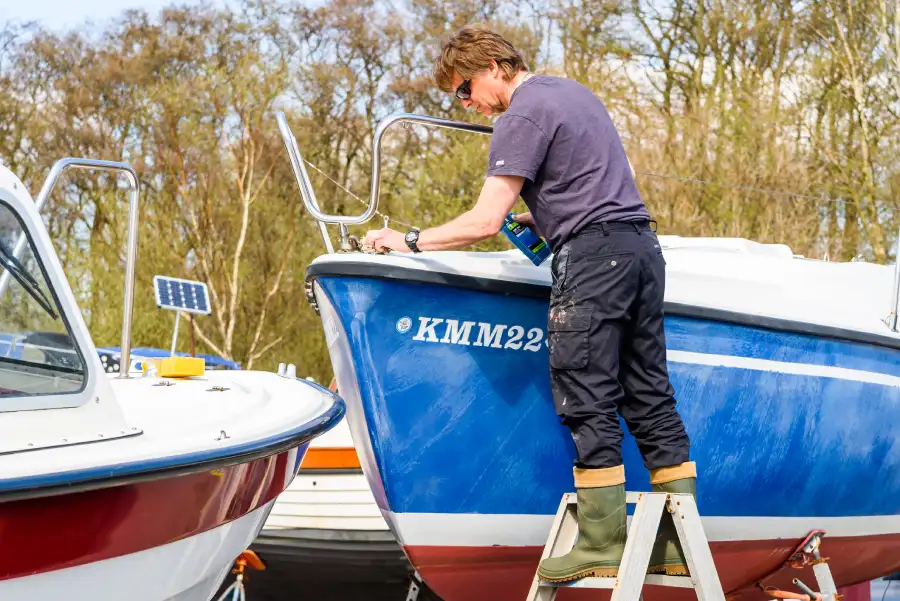
Before applying ceramic coating to a boat, the surface must be fully clean and dry. Any old buildup, salt, or wax must be removed. The hull should also be in good shape with no loose paint or cracks.
Here is what is usually needed:
- A full hull wash to remove slime and debris
- Decontamination of salt and mineral deposits
- Light polishing if the surface is oxidized
- A dry, dust-free area for application
If the surface is not prepared the right way, the coating may not bond well. That can lead to uneven protection and shorter lifespan.
Step-by-Step: How Ceramic Coating Helps Prevent Marine Growth
Once the surface is ready, the ceramic coating process follows a clear set of steps. Each step helps build a strong barrier between the water and your hull.
-
Surface prep: The hull is cleaned and corrected so it is smooth.
-
Application: The ceramic coating liquid is applied in small sections.
-
Bonding: The coating chemically bonds to the surface.
-
Curing: The coating hardens and forms a slick shell.
-
Final check: The surface is inspected for full coverage.
After curing, the hull feels smooth to the touch. Marine organisms have a harder time attaching to this treated surface. Even if some slime forms, it does not grip as tightly as it would on bare gelcoat.
Common Mistakes to Avoid
Some boat owners try to rush the process or skip prep work. That often leads to poor results. Here are mistakes to watch out for:
- Applying coating over a dirty or chalky surface
- Using the wrong product for marine exposure
- Not allowing proper curing time
- Expecting it to completely replace bottom paint in all cases
Ceramic coating reduces growth, but it does not make your boat immune to nature. Boats stored in saltwater year-round may still need routine cleaning. The coating makes that cleaning faster and less aggressive.
When to Call a Professional
Applying ceramic coating to a boat hull takes skill and patience. Large vessels require even coverage across wide surfaces. Missed spots or high spots can affect performance.
You may want professional help if:
- Your boat stays in the water for long periods
- The hull has heavy oxidation
- You want multi-year protection
- You are switching from traditional wax to ceramic coating
A trained team will know how to prep gelcoat, painted surfaces, and metal trim the right way. They can also advise whether ceramic coating works best above or below the waterline for your specific boat.
Final Recommendation
Ceramic coating is a smart way to slow down marine growth buildup and make cleaning much easier. It forms a smooth barrier that algae and barnacles struggle to grip. When applied correctly, it helps protect your hull, maintain speed, and reduce long-term maintenance work. If you want longer-lasting surface protection for your boat in Fort Lauderdale, FL, we can help. At East Coast Boat Detailing, our team applies marine-grade ceramic coating with careful surface prep and proper curing time. Call us at (954) 803-6238 to talk with us about protecting your boat this season.